
This section will guide you through the essentials of recording business transactions, providing insights into best practices, common pitfalls, and regulatory compliance. Master the art of recording business transactions in Canadian accounting with this detailed guide. Learn the steps, principles, and best practices for accurate financial reporting. By following these six simple procedures, you may accurately record business transactions and keep a clear and organized record of your company’s financial health. Good record-keeping is critical to the success of any business, so make time on a regular basis to record and evaluate your transactions. Revenue accounts, which increase owner’s equity, follow the credit rule for increases and the debit rule for decreases.
Owner Withdrawals
- A business transaction is any event that has a monetary impact on the financial statements of a company.
- Identifying and recording these transactions accurately is crucial for maintaining the integrity of financial records.
- Public companies typically follow IFRS, while private enterprises may choose ASPE.
- Applying the principles of debits and credits within the journal entry structure allows for the accurate recording of diverse business transactions.
- The general ledger serves as a comprehensive collection of all the individual accounts, providing a summary of financial transactions organized by account type.
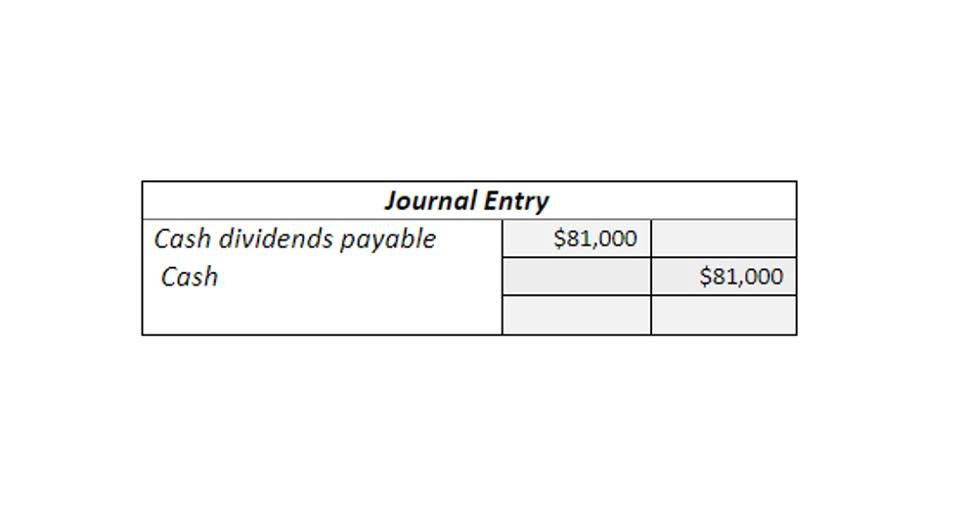
All requirements that apply to hard copy books and records also apply to electronic records. For more detailed information refer to Publication 583, Starting a Business and Keeping Records. Business transactions are ordinarily summarized in books called journals and ledgers. The Owner’s Drawings or Owner’s Withdrawals account (a contra-equity account) is debited, and the Cash account is credited for the amount withdrawn. For example, if an owner withdraws $1,000 cash for personal use, Owner’s Drawings is debited for $1,000 and Cash is credited for $1,000. Purchases, sales, payroll, and other transactions you have in your business will generate supporting documents.
The following are some of the types of records you should keep:
Identifying and recording these transactions accurately is crucial for maintaining the integrity of financial records. Once journal entries are meticulously recorded, the next procedural step in the accounting cycle is to transfer, or “post,” these entries to the general ledger. The general ledger serves as a comprehensive collection of all the individual accounts, providing a summary of financial transactions organized by account type. It functions as a master record where the cumulative effect of all journal entries on each specific account is maintained. Following the date, the specific accounts affected by the transaction are listed.
Preparing Financial Statements
Expense accounts, which reduce owner’s equity, behave similarly to assets, increasing with a debit and decreasing with a credit. This consistent application ensures the accounting equation remains balanced after every transaction. For example, if a business receives cash for a service, Cash (an asset) increases with a debit, and Service Revenue (an equity-increasing account) increases with a credit, maintaining the balance. A trial balance is a list of all ledger accounts and their balances at a particular time.
What kind of records should I keep
In Canada, recording business transactions must comply with either IFRS or ASPE, depending on Oil And Gas Accounting the type of enterprise. Public companies typically follow IFRS, while private enterprises may choose ASPE. Once a transaction has been recorded in the appropriate journal, it is moved to the proper ledger account.

The corresponding credit would be to Cash if paid immediately, or to Accounts Payable or Notes Payable if purchased on credit or financed. For example, buying equipment for $5,000 cash would be a debit to Equipment and a credit to Cash for $5,000. A standard journal entry systematically captures the necessary details of a financial transaction.
After recording transactions in the journal, the next step is to post them to the ledger. The ledger is a collection of accounts that shows the changes made to each account as a result of transactions and the current balance of each account. https://harlemshakeroulette.com/top-5-bookkeeping-software-solutions-a/ When expenses, such as rent or utilities, are paid in cash, the corresponding Expense account (e.g., Rent Expense) is debited, as expenses increase with debits. For example, paying a $500 rent bill would result in a debit to Rent Expense and a credit to Cash, both for $500. A journal is a chronological record of transactions, while a ledger is a collection of accounts that summarizes transactions by account type. Transactions are first recorded in journals and then posted to the appropriate accounts in the ledger.
This includes the precise date of the transaction, which establishes a chronological record of events. As a small recording business transactions business owner, I used to think that handling my accounting the old-fashioned way, keeping paper records,… Journals can be general or specialized, depending on the nature of the transactions. This structured format ensures that all relevant information for each transaction is captured consistently, facilitating accurate record-keeping and financial analysis. At Link4Solution, we provide reliable and professional virtual accounting and tax preparation services to businesses through CPA’s, CA’s and experienced accountants globally.
This increases the liability, while the asset or expense account purchased is debited. Adjusting entries are made at the end of an accounting period to update account balances before preparing financial statements. These entries ensure that revenues and expenses are recognized in the period they occur, following the accrual basis of accounting. Loan transactions involve recording the receipt of loan funds and subsequent payments. When a business receives a loan, the Cash account is debited, and a Liability account, such as Notes Payable or Loans Payable, is credited. For a $10,000 loan, Cash would be debited and Notes Payable credited for $10,000.